Table of contents
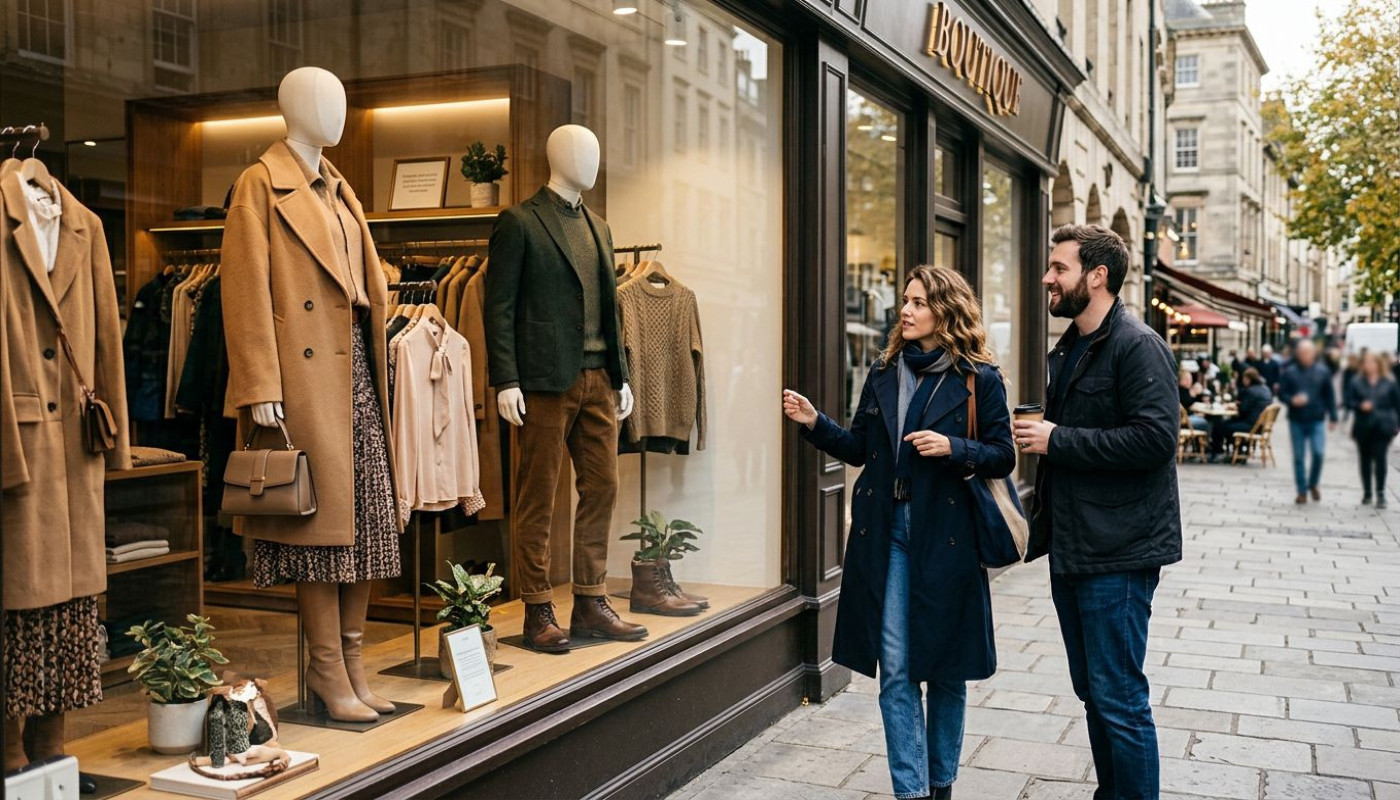
At street level, fashion’s biggest story often isn’t on the catwalk, it’s in the glass: boutique windows that translate runway spectacle into something you can actually buy, wear, and live in. As luxury groups report uneven demand, and as resale and fast fashion keep compressing trend cycles, storefront styling has become a fast, visible barometer of what’s landing right now. For shoppers, photographers, and brands alike, those curated windows act as public mood boards, and the signals they send are rarely accidental.
Window displays are trend reports in real time
Who needs an invite to a show when the street is the front row? The smartest windows compress months of runway coverage into a single glance, and they do it with the kind of clarity that even seasoned editors appreciate, because a display has to read instantly, from several meters away, and under the harsh honesty of daylight.
That “instant readability” is not just aesthetics, it is strategy, and it follows patterns that have become more pronounced as trend cycles speed up. After pandemic-era loungewear dominance, the pendulum swung back toward occasion dressing, then softened again into hybrid looks, with tailoring worn like separates and technical pieces treated as daily essentials. You can see these shifts in the way mannequins are layered: a structured blazer left open over a sheer top, a maxi skirt paired with a performance jacket, loafers replacing stilettos, and accessories doing more of the talking than before. Recent runways from Paris, Milan, London, and New York have all pushed some version of this mix, but it’s the window that decides what becomes legible to the broader public.
Merchants also use the window as a “now” filter on top of runway direction. A catwalk may celebrate extremity, yet boutiques sell wardrobes, so the display often strips an idea to its most transferable element: a color story, a silhouette line, a single fabric, or a recognizable styling trick. The clearest examples tend to be color and proportion, because they read fast. When deep reds and burgundies rise, they appear as one dominant coat flanked by tonal knits; when metallics trend, they arrive first as bags and shoes, then creep into skirts and jackets. Proportions follow a similar logic: a move from skinny to wide-leg trousers shows up in a window weeks before it feels “common” on the street, because a boutique can broadcast that shift with four mannequins and a strong spotlight.
There is a commercial reason this has intensified. In its 2024 annual report, Inditex, the owner of Zara, posted record net sales of €35.9 billion for fiscal 2023 and net income of €5.4 billion, figures that underscored how quickly fast-moving assortments can meet demand when product and presentation align. Luxury, meanwhile, has faced a more uneven 2024, with several groups highlighting softer growth than the post-pandemic surge. In that environment, every square meter of retail has to work harder, and the window becomes an editorial page that also has to convert.
Small details tell you who a shop targets
The window speaks, but it also whispers. Beyond the obvious headline pieces, the real intelligence sits in the styling details that most passersby register subconsciously, because those details are how a boutique signals price point, taste level, and cultural tribe without ever saying so.
Start with materials and finishing. Natural fibers presented uncreased, sharply steamed, and paired with discreet hardware tend to signal premium positioning; synthetic shine, loud logos, and high-contrast graphics can signal youth orientation, trend acceleration, or deliberate irony. Even the way a garment is pinned on a mannequin matters, because it telegraphs whether the store is selling an aspirational fantasy or everyday ease. A sharply cinched waist with aggressive clipping indicates “editorial,” while a more relaxed drape indicates “wearable,” and that choice is rarely accidental in a competitive retail corridor.
Accessories are the loudest whisperers. A window heavy on belts, charms, and stacked jewelry suggests a customer who treats styling as play, often younger, often influenced by social media micro-trends. A window that emphasizes one strong bag shape, a single watch, and minimal jewelry suggests confidence, discretion, and an older or more classic buyer. Footwear tells a similar story: ballet flats and Mary Janes can communicate softness and nostalgia; chunky soles imply utility and edge; sleek loafers suggest a return to office-ready polish. These are not universal rules, but they are reliable signals when you read them together, the way an editor reads a look head to toe.
Then there is the cultural coding, which has become more explicit as fashion fragments into micro-scenes. A boutique that leans into layered streetwear, playful graphics, and experimental silhouettes may be drawing from Tokyo’s long-standing street style ecosystems, where subcultures can drive mainstream adoption years later. For readers interested in how those signals get translated across neighborhoods and continents, click for more info, because the way style travels is often clearer when you track it through the street rather than the runway.
Finally, consider the non-fashion choices: typography, lighting temperature, spacing, and even the soundtrack leaking through the door. Cool, bright lighting makes fabrics look crisp and modern, while warm lighting flatters skin tones and pushes intimacy. Sparse windows with negative space suggest confidence, and they invite the shopper to “project” themselves into the look; crowded windows suggest abundance, urgency, and fast turnover. Each of these choices maps to a target customer and a sales rhythm, and once you learn to read them, you can often guess the pricing tier before you step inside.
Social media turned windows into content studios
One photo can do the work of a campaign. The modern boutique window is built not only for pedestrians, but also for lenses, because a striking display can travel instantly through TikTok, Instagram, and local group chats, generating footfall without paid media.
This shift has changed how windows are designed. High-contrast color blocking, reflective surfaces, bold props, and clear focal points are all “camera-friendly,” and they help a passerby capture a readable image in seconds. Even the placement of mannequins can be optimized for the smartphone frame: one hero look centered, supporting looks angled to create depth, and signage positioned where it will not clash with the subject. The best windows now behave like sets, with a clear narrative beat, because narrative is what converts a snapshot into a share.
It is also why boutiques increasingly build windows that anticipate micro-trend behavior. A trending color or silhouette might peak within weeks, not seasons, and a window can be swapped faster than a full campaign can be produced. That agility matters when consumers are browsing more, hesitating more, and comparing more, especially during periods of inflation pressure. Retail data over the past few years has shown shoppers chasing value and versatility, and windows have responded by foregrounding “wear it three ways” styling: a trench over denim, then over a dress, then with tailoring. The message is subtle but direct, and it meets the buyer where they are: cautious, curious, and looking for justification.
There is a second, less discussed effect of social media: windows have become public proof of a store’s point of view. In an era when e-commerce makes inventory feel infinite, physical retail wins when it offers editing, guidance, and atmosphere. A window that feels coherent, surprising, and well-styled tells the customer, before any conversation happens, that the boutique has taste, and taste is still the most defensible luxury. That is why some of the most photographed windows are not necessarily the most expensive, but the most decisive: they choose a story and commit to it.
Reading a window helps you shop smarter
Want fewer regrets and better outfits? Treat the window like a pre-purchase checklist, because it can help you identify what is hype, what is useful, and what is actually missing from your closet.
First, look for the “anchor piece,” the item the entire display depends on. If the window collapses without that one coat, bag, or pair of trousers, then the store is telling you that this is the season’s hero, and you should judge it with extra skepticism. Ask yourself whether it fits your real life: commuting, weather, workplace norms, and the shoes you already own. If it does, then the window has done its job, because it has shown you not only what the item is, but how it can live with other pieces.
Second, watch the styling math. Good windows often reveal proportion formulas that you can replicate at any budget: oversized top with slim bottom, long coat over short hem, or monochrome base with one contrasting accessory. These formulas are the practical translation of runway ideas, and they are usually more valuable than chasing exact products. If you can identify the formula, you can shop your own wardrobe, then fill only the true gaps.
Third, use the window to benchmark price versus construction. Even before touching a garment, you can often see whether knitwear has density, whether trousers hold a crease, and whether outerwear has structure. If the boutique presents a piece front and center, under unforgiving light, it is implicitly confident in how it looks. That confidence is not a guarantee of quality, but it is a clue, and you should combine it with basic checks once inside: fiber content, seam finishing, lining, and care instructions.
Finally, remember the window’s hidden function: it reduces choice. In a market saturated with options, curation is a service, and the window is the first edit. If you train yourself to read its signals, you will walk into stores with a clearer plan, you will waste less time, and you will be less vulnerable to impulse buys that look good only under boutique spotlights.
What to do before you buy
Plan a focused visit, and go when staff have time to advise, typically weekday mornings or early afternoons. Set a budget with a 10% margin for alterations, then ask about tailoring, returns, and care. Check local programs for repair or textile-reuse incentives, and use resale platforms to benchmark pricing before committing.
Similar articles

Secret Societies: How Unique Local Guides Foster Belonging
Exploring The Unique Benefits Of Custom-made Percussion Instruments

Essential Tools And Resources For Launching Your Nonprofit Organization

What are the essential tips to improve your poker game strategy ?

Translation project : Why use a translation agency ?

Gonzo's Quest: Conquer the reels and claim your share of ancient riches!

What are the different types of eSports bets you can place ?

How to accessorize a Durag with your outfit?

Should you leave your PC charger plugged in all the time ?

The Rajbet app: what are its advantages ?

Odds in gambling : What you didn’t know

Tips to make your love life better

What is DNS?

What is the best DNS server?

Kratom capsule: what is it and what are its uses?

Top 5 traditional board games around the world!